Going Borg

Those of you who know me know that I’ve always been “unique” (take that as you will). In this specific case, they know I have a chronic pain condition known as New Daily Persistent Headache (NDPH). Needless to say it’s about as fun as it sounds, but it’s not something I’m going to cover in great detail. What I will cover however, is our last ditch attempt treatment option which involves becoming a cyborg.

What do I mean by saying I’m going to be a cyborg? There was a great news spot done about a young girl who had the same procedure as I’m getting. The way one of the  lovely neurosurgeons here in Ottawa explained it is that it’s still a very new procedure. Oddly enough, I’m actually entirely OK with this. It’s an existing technology that they’ve already been using by implanting a nerve stimulator attached to people’s spines. In my case they’re going to adapt the surgery and attach it to the back of the head, specifically my greater and lesser occipital nerves. If you’ve ever been to physio and had a TENS machine strapped on and zapping your muscles then you’ll know exactly what it’s like, except they’re actually implanting the wires in the back of my head, and the device under my collarbone.

Here’s a photo showing where the nerves are. Nerve blocks are something I’ve had done before, so I guess the big needle is still relevant.

Occipital_Nerve_Block


There are some pretty amusing side effects. For one, any kind of magnetic field will cause the device to reset. This means walking into Best Buy or any other store with magnetic security will set it off and I have to reset the device using an external remote they give me. Another is that the first stage of the surgery is with a trial device that will have the leads connected to my nerves outside my skin for the first week. I think it’s best I avoid airports while the trial device is being used.

Words cannot described how awed and amazed I am at where we are going using technology in human bodies. This procedure is tame compared to some of the awesome advances we’ve been making. Just look at the impact that Deep Brain Stimulation has had on this man with Parkinsons.

I’ve always been a big fan of wearable tech and I guess this as just one way of taking that one step further. I’ll be sure to post photos when the trial surgery is done at the end of May.

Sadly, I have been told they will not install a USB port for me, despite my requests.


Edit: Just got told my surgery has been bumped to the 26th meaning I’m flying to Toronto with my trial device at the end of the month. Wish me luck with getting through airport security!
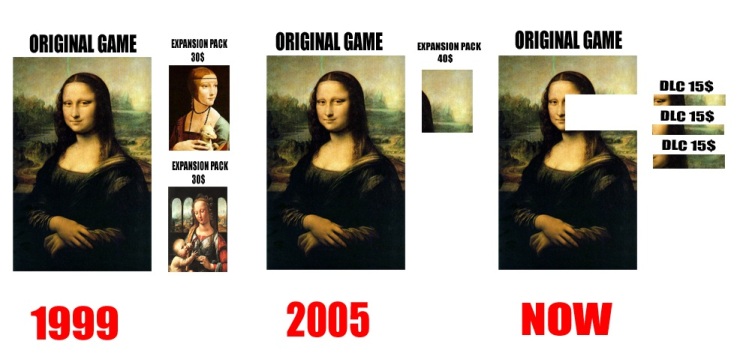
What do you expect from your DLC? Why I believe Bioshock got it right.

When you see downloadable content for a video game, how much are you expecting to be added to the game’s base price? People have had a love/hate relationship with the idea of DLC since it was introduced; it’s not uncommon to hear criticisms about launch day DLC. Many say it should have been part of the game already, and often you feel like you’re being told to pay extra for things that should have been included in the first place. We’ve all heard the complaints.

Image


So is there a way of doing DLC right? I think the answer is yes, but it comes down to a matter of value versus cost. What really sealed this idea for me was Bioshock Infinite: Burial at Sea.

Burial at Sea is a two-part DLC for Bioshock Infinite, currently running either $14.99 per episode or $19.99 for the season pass that contains both episodes, as well as a weapon pack and the combat focused DLC “Clash in the Clouds”. A lot of DLC we see these days, often a lot cheaper than this, is just a few minor additions or modifications to the game. The major mentality seems to fall under the microtransaction concept that’s been sweeping the industry. Even I’m guilty of the occasional $0.99 skin pack purchase, or $2.99 for extra Borderlands 2 missions. The question is, what does Burial at Sea bring to the table to be worth $20 that couldn’t be included in the original game?

Finishing both episodes took us about seven hours in total, and that was without too much exploration and sidetracking. Both of the episodes take place in Rapture, but not as we’ve seen it before: this is Rapture from the its glory years and it looks fantastic on Infinite’s Unreal 3 engine while really bringing you back to the Bioshock you know and love.

In the first episode you play once again as Booker DeWitt with Elizabeth once again aiding you on your adventures. The gameplay is very similar to that of Bioshock Infinite, with the reintroductions of classic elements like Plasmids. Having access to both game’s best combat features makes for a good time, but the first episode feels all too short. I would have loved to spend more time running around Rapture jumping around and blasting people, but it all quickly comes to a pretty abrupt halt.

In the second episode you actually play as Elizabeth, which transitions you into a more stealth-focused method of gameplay that really changes the pacing of the game. The new primary method of working your way through the hordes of Splicers is to quietly approach (or run up while invisible), and to use your one-hit, non-lethal K.O hit that will take care of just about anyone not wearing a helmet. A meter to determine how aware your enemies are of you now appears overhead to assist, which I was surprised didn’t fill faster, if I accidentally came across an enemy considering the noise Elizabeth makes wearing her heels when running.

If this gameplay style was mixed with the fast paced swinging and pouncing of Infinite it would be enough to give you whiplash, but it feels right at home in the DLC, considering Elizabeth’s inability to take a hit. They also introduce new non-lethal options for weapons to compliment Elizabeth’s style, such as knock-out bolts and gas attacks launched from a crossbow.

This new stealthy Bioshock comes with it’s ups and downs; It’s nice to see it mixed up from the usual pouncing from the sky upon the heads of your enemies and killing them in one hit, but the use of the invisibility-granting Peeping Tom plasmid makes it feel like you’re almost cheating. A group of enemies can completely surround you, but with one quick cast of a plasmid your apparently very dim-witted aggressors suddenly have no idea where on earth you could be. Then, it’s just a whack of your one-hit K.O stealth attack, back into invisibility, rinse and repeat until all your enemies lie in a heap at your feet.

The real icing on the cake for me is the story. Irrational Games did a great job of creating a story and environment you can really sink your teeth into with Bioshock and Bioshock Infinite. Burial at Sea not only expands the existing story but actually fills in characters we had met previously by giving us views into their motives and expanding their histories. We learn more about the universe, and it does a great job at tying the worlds of Rapture and Columbia together, wrapping up loose ends in a way that will leave story junkies like myself with the kind of satisfied feeling you get after a good meal.

All in all, for $20 you get new gameplay, new weapons, at least 7 hours of content, the chance to once again explore Rapture, and a story elements that don’t fit in the main games but are too good not to be told. This, ladies and gentleman, is an example of DLC done right.

Welcome!

Hello everybody out there! Welcome to Eat, Sleep, Geek Repeat, where the goal is lively discussion on all that is part of geek culture.

We’re still in the process of renovating and getting everything up and running, but eventually we’ll be updating with posts on everything from board games, video games, RPG, and technology in general (pretty much whatever we find interesting!).